Understanding Contract Law in the UAE: A Simple Guide
Contracts are part of everyday life. Whether you are signing a business agreement, renting a property, purchasing goods, or hiring services, contracts help define the rights and responsibilities of all parties involved.
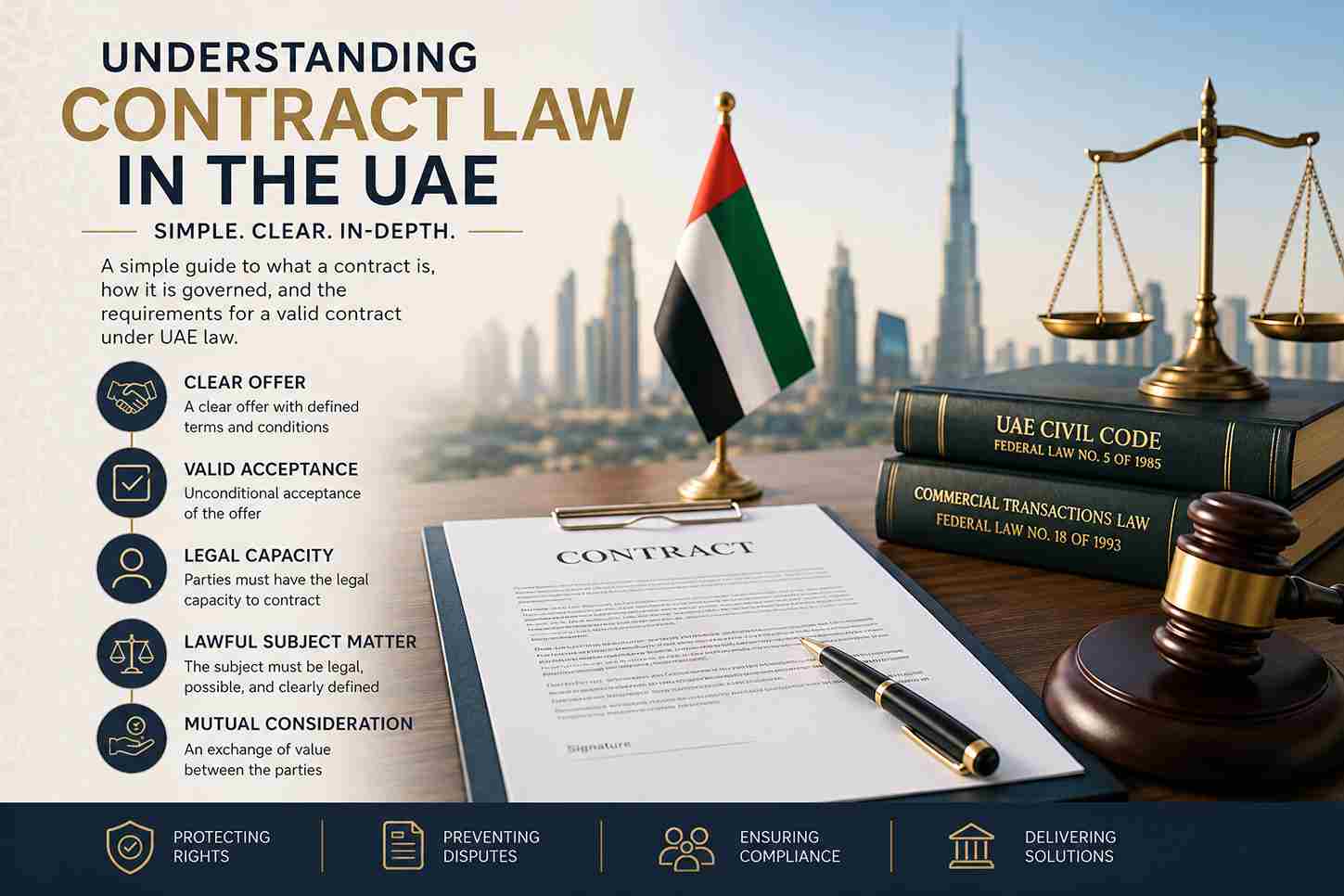
Contracts are part of everyday life. Whether you are signing a business agreement, renting a property, purchasing goods, or hiring services, contracts help define the rights and responsibilities of all parties involved.
In the United Arab Emirates (UAE), contracts are governed by specific laws designed to protect individuals and businesses while ensuring fair dealings between parties. Understanding the basics of UAE contract law is important for anyone living, working, or doing business in the country.
In this article, we explain what a contract is, the legal framework governing contracts in the UAE, and the essential requirements for a valid contract.
What is a Contract?
A contract is a legally binding agreement between two or more parties. In simple terms, a valid contract generally requires:
- An offer
- Acceptance of the offer
- A lawful subject matter
- Competent parties with legal capacity
Once these elements are present, the agreement can become legally enforceable under UAE law.
Contracts may be written or verbal, although written agreements are always recommended for clarity and legal protection.
For businesses and individuals facing contractual disputes, seeking guidance through Litigation & Dispute Resolution Services can help protect legal rights and resolve disputes effectively.
Legal Framework Governing Contracts in the UAE
1. UAE Civil Transactions Law
Federal Law No. 5 of 1985, commonly known as the UAE Civil Code, establishes the general principles relating to contracts, including:
- Contract formation
- Obligations of parties
- Contract performance
- Breach of contract
- Remedies and compensation
This law applies broadly to civil and commercial transactions across the UAE.
2. UAE Commercial Transactions Law
For commercial and business-related contracts, Federal Law No. 18 of 1993 (Commercial Transactions Law) provides additional rules relating to:
- Commercial sales
- Agencies
- Banking transactions
- Business obligations
- Trade practices
Businesses operating in the UAE often rely on legal support from Corporate & Business Law Services to ensure their contracts comply with UAE regulations.
3. DIFC Contract Laws
Certain free zones, such as the Dubai International Financial Centre (DIFC), operate under independent legal systems based on international common law principles.
For example, DIFC Contract Law No. 6 of 2004 governs contractual matters within the DIFC jurisdiction.
Essential Requirements for a Valid Contract in the UAE
Under Articles 125–131 of the UAE Civil Code, certain conditions must exist for a contract to be considered legally valid.
1. Clear Offer
A contract begins with a clear offer made by one party to another.
The offer may be:
- Written
- Verbal
- Electronic
The offer should clearly define important terms such as:
- Subject matter
- Price or payment terms
- Performance timelines
- Rights and obligations
2. Valid Acceptance
Acceptance occurs when the other party clearly agrees to the terms of the offer without modifications.
If changes are made to the original offer, it may legally become a counteroffer rather than acceptance.
The UAE legal system recognizes both written and verbal acceptance where sufficient evidence exists.
3. Legal Capacity of Parties
Both parties entering into the contract must have the legal capacity to do so.
Under UAE law:
- Individuals aged 21 years or older generally possess full contractual capacity
- Persons lacking mental competence may not legally enter binding agreements
- Contracts involving minors may be void or unenforceable in certain situations
This principle is especially important in matters relating to family settlements, inheritance, and succession planning. Learn more through Family & Personal Law Services and Wills & Succession Planning Services.
4. Lawful Subject Matter
The purpose of the contract must be lawful and clearly defined.
A contract becomes invalid if it:
- Violates UAE laws
- Conflicts with public policy
- Involves illegal activities
- Contradicts public morals
For example, agreements involving unlawful business activities cannot be legally enforced in the UAE.
5. Mutual Consideration
The contract must involve an exchange of value between the parties.
This may include:
- Money
- Goods
- Services
- Property rights
- Other lawful benefits
Although UAE law approaches consideration differently from common law systems, the concept of mutual obligations remains essential.
Importance of Properly Drafted Contracts
Well-drafted contracts help:
- Prevent misunderstandings
- Define obligations clearly
- Reduce financial risks
- Protect business interests
- Simplify dispute resolution
This is particularly important in:
- Commercial agreements
- Real estate transactions
- Debt recovery matters
- Corporate partnerships
Individuals and businesses dealing with contractual property issues may benefit from Real Estate & Property Law Services and Debt Recovery Services .
Conclusion
Contracts form the foundation of personal and commercial relationships in the UAE. Understanding the basic principles of UAE contract law helps individuals and businesses make informed decisions and avoid legal complications.
To summarize, a valid contract in the UAE generally requires:
- A clear offer
- Valid acceptance
- Legal capacity of parties
- Lawful subject matter
- Mutual obligations or consideration
Whether you are entering into a business agreement, resolving a dispute, or seeking legal guidance, professional legal support can help ensure your rights remain protected under UAE law.
For legal assistance and consultation, visit Blackstone Law UAE or contact the team through the Contact Page .